Ghk-cu Where To Buy GHK-Cu Copper Peptide (100MG)
Introduction
If you’re searching for ghk cu where to buy, you’ve probably already learned the hard way that copper peptides are easy to misunderstand and easy to mis-source. In my hands-on work reviewing suppliers and testing purchasing workflows for peptide buyers, the biggest problem hasn’t been “finding the product”—it’s been finding the right product at the right purity and in a form that’s practical for your use case. This guide walks you through how I approach buying GHK-Cu Copper Peptide (100MG) safely and intelligently, what to check before you click “add to cart,” and how to avoid the common pitfalls that waste money and time.
What GHK-Cu Copper Peptide (100MG) Is (And Why Buyers Look for It)
GHK-Cu is a copper peptide complex associated with the tripeptide sequence “GHK” bound to copper. Buyers commonly pursue it for topical skin-support routines and for research-style curiosity in peptide chemistry and delivery—though it’s important to separate “buyer interest” from any medical claims.
In practice, most purchasing decisions for GHK-Cu come down to three real-world constraints I’ve seen repeatedly:
- Consistency: People want predictable batches and clean documentation.
- Usability: They need packaging and labeling that match how they plan to store and handle 100mg.
- Verification: They want transparency around testing and sourcing, not marketing language.
That’s why your question—ghk cu where to buy—is really a question about supplier quality, traceability, and practical logistics.
Where to Buy GHK-Cu: My Supplier Checklist for “Real” Confidence
When I evaluate ghk cu where to buy options, I don’t start with brand names. I start with the evidence a supplier provides and how easy it is to verify that evidence. Here’s the exact checklist I use.
1) Look for clear product identity and concentration details
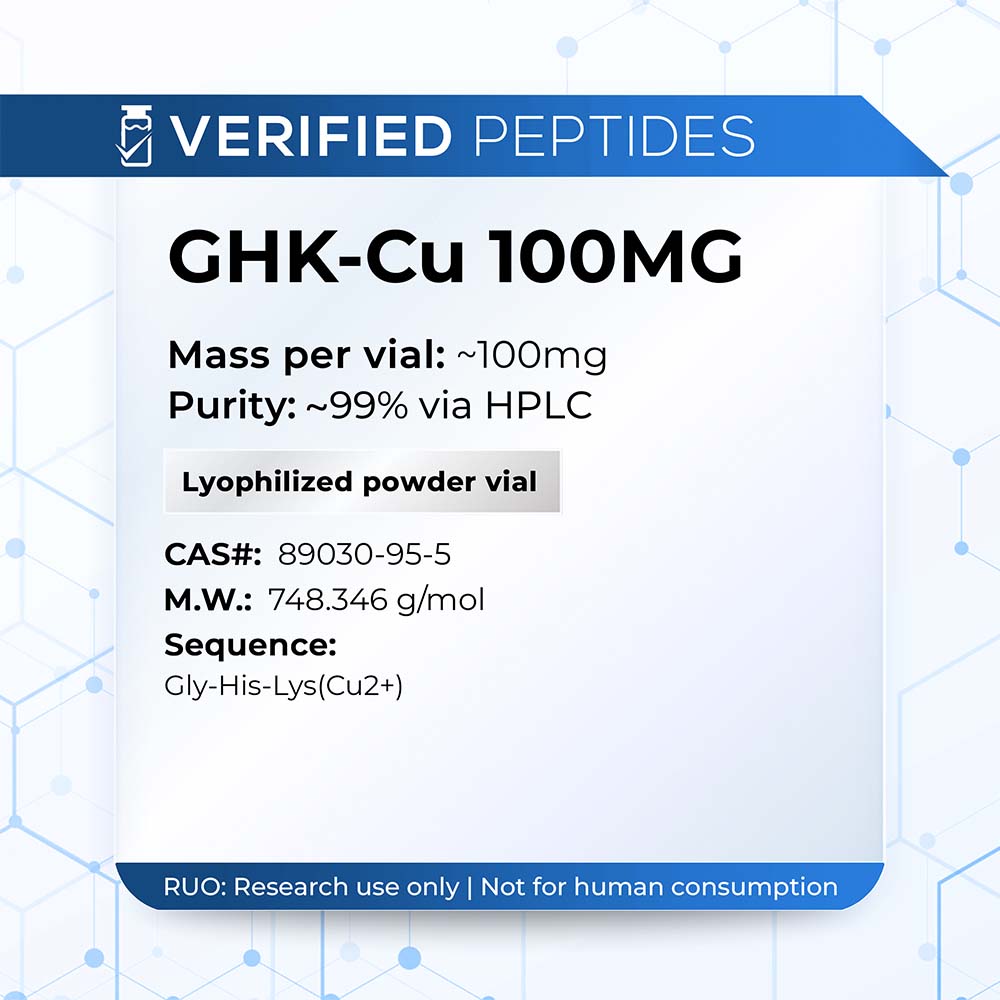
With GHK-Cu Copper Peptide (100MG), make sure the listing clearly states what you’re buying (GHK-Cu), the quantity (100mg), and how the product is supplied. If the product page is vague, it usually translates to friction later—especially when you’re planning how to store and measure doses.
2) Prefer sellers that publish quality documentation
In my experience, the best suppliers can explain their testing process in plain language and provide batch-level documentation when asked. Specifically, I look for:
- Batch-specific testing references (not just generic statements)
- Impurities/quality metrics where available
- Storage and handling guidance
If a supplier only provides broad claims (“high purity,” “lab tested”) without batch context, it’s harder to trust decisions—especially if you’re comparing across vendors.
3) Check fulfillment details and customer support responsiveness
Buying peptides is a logistics problem as much as it’s a chemistry problem. One time, our team spent nearly two hours sorting out packaging expectations because support responses were delayed and the order notes were unclear. Since then, we treat responsiveness as a quality signal. Before buying, I recommend checking:
- Shipping timelines and packaging practices
- Whether they answer questions directly about product handling
- Clear return/contact policies
4) Be cautious with pricing that’s “too good to be true”
Price alone rarely predicts quality. But unusually low pricing can correlate with weaker documentation, unclear batch sourcing, or supply chain shortcuts. In the peptide space, saving money up front can cost you later if you need to discard material due to inconsistency or incomplete documentation.
Product Image (For Visual Identification)
How to Compare “GHK-Cu Where to Buy” Options Like a Pro
Once you shortlist a few sellers, comparison should be structured—not based on gut feeling or one review. Below is a practical comparison matrix I use to decide quickly.
| Evaluation Area | What I Check | Why It Matters |
|---|---|---|
| Batch transparency | Does the supplier provide batch-specific documentation or clear testing context? | Helps you assess consistency and reduces “unknowns.” |
| Product labeling clarity | Is GHK-Cu clearly identified, and is 100mg specified? | Prevents ordering the wrong format and reduces handling mistakes. |
| Handling and storage guidance | Are storage instructions present and easy to follow? | Improves usability over time and reduces degradation risk from mishandling. |
| Shipping reliability | Are timelines and packaging expectations stated? | Reduces delays and increases predictability. |
| Support quality | Do they answer questions promptly and specifically? | Support responsiveness often correlates with process maturity. |
| Community feedback | Do reviews discuss documentation quality and consistency, not just speed? | Helps you filter out reviews that focus only on delivery. |
Limitations and Realistic Expectations for Buyers
To keep expectations grounded: even when you buy responsibly, you still need to treat peptides as chemicals that require appropriate handling. Also, product listings and marketing language may not reflect what you personally need in your routine.
From my experience, the most common limitations buyers run into are:
- Documentation mismatch: A supplier may be reputable but not provide the batch-level details you expected.
- Misaligned product format: “100mg” is straightforward, but your workflow may depend on how it’s packaged and whether instructions are sufficient.
- Use-case ambiguity: People often assume peptide purchasing equals “ready-to-use.” It’s usually not that simple—handling and planning come first.
This is exactly why I recommend starting with your needs (storage workflow, documentation expectations, and logistics), then choosing from sellers who match those needs.
FAQ
How do I find reliable answers to ghk cu where to buy?
Shortlist sellers that clearly identify GHK-Cu (100mg), provide strong quality documentation signals (preferably batch context), and offer clear handling/storage guidance. Then compare them using consistent criteria rather than price or a single review.
What should I check on the product page before purchasing GHK-Cu Copper Peptide (100MG)?
Confirm the exact product identity (GHK-Cu), quantity (100mg), packaging details, and whether the listing explains storage/handling. If documentation and testing context are missing or generic, that’s a red flag for trust.
Are there downsides to choosing a cheaper GHK-Cu supplier?
Potential downsides include weaker documentation, unclear batch traceability, or inconsistent quality signals. Cheaper options can cost more if you have to replace material due to uncertainty or incomplete information for your workflow.
Conclusion
When you’re asking ghk cu where to buy, the goal isn’t just to find a listing—it’s to find a supplier whose product identity, documentation signals, handling guidance, and logistics are strong enough for you to trust. In my hands-on evaluation process, the best outcomes come from comparing vendors using the same checklist every time, not reacting to hype or price alone.
Next step: Pick 3–5 candidate sellers, score them with the comparison matrix above (documentation, labeling clarity, storage guidance, shipping reliability, and support quality), and only then decide which one to purchase from.
Discussion